Wired vs. Wireless
Security Cameras:
Which Is Right for You?

As security systems are deployed across more diverse environments, from office buildings and warehouses to construction sites, parking lots, and remote outdoor areas, choosing between wired vs. wireless security cameras has become increasingly confusing. With options ranging from PoE camera to Wi-Fi, battery-powered, 4G/5G cellular, and solar-powered cameras, buyers are no longer just comparing products, but deciding how their sites will be powered and connected.
This guide provides a clear overview of how wired and wireless security cameras work, where each fits best, and the trade-offs involved, helping organizations select the right surveillance architecture based on real-world deployment needs.
What is a Wired Security Camera?
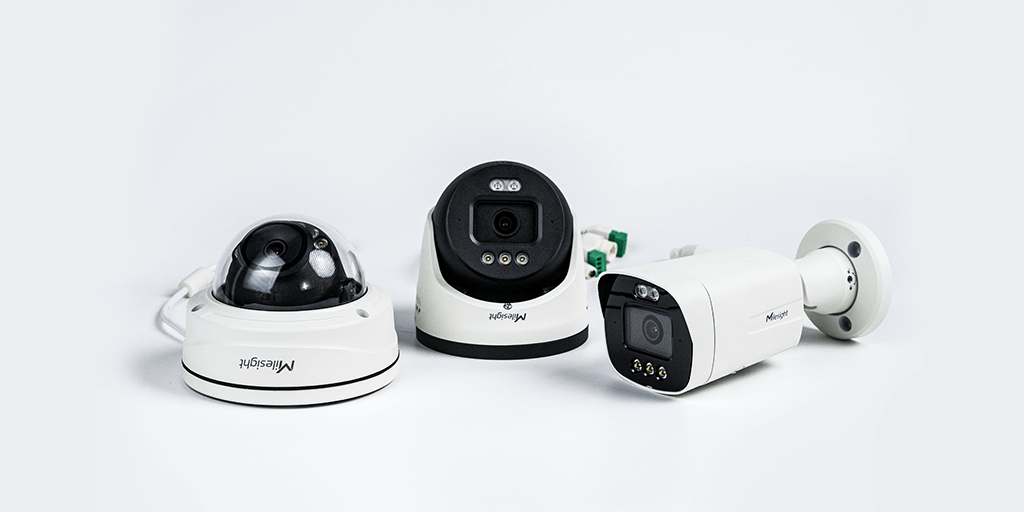
A wired security camera is a surveillance camera that receives both power and network connectivity through physical cables, typically using Power over Ethernet (PoE) as part of an Ethernet-based surveillance system. In this architecture, each camera is physically connected to network switches and recording servers, allowing video to be transmitted continuously over a local wired network rather than through Wi-Fi or cellular links.
How Wired Security System Works?
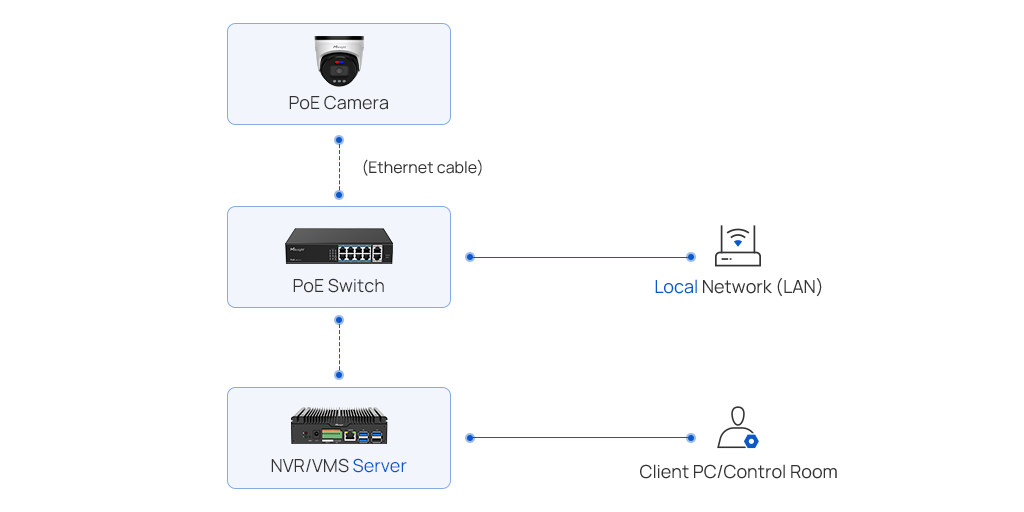
In a wired surveillance setup, each PoE camera connects via an Ethernet cable to a network switch, which provides power and carries video data at the same time. Video streams are delivered through the wired LAN (Local network) to a Network Video Recorder (NVR) or Video Management System (VMS), where footage is recorded, viewed, and managed. This design enables stable, high-bandwidth, 24/7 video transmission, making wired systems ideal for permanent security installations.
Wired security cameras are designed for permanent, infrastructure-ready sites. When power, network ports, or cable routes are unavailable or when security needs to move with the site, the wired surveillance system no longer fits.
What is a Wireless Security Camera?
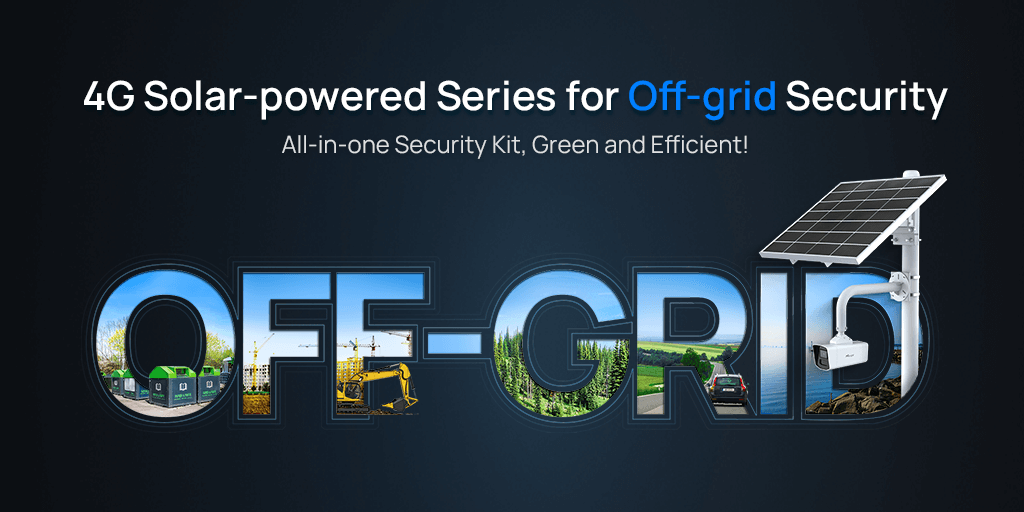
A wireless security camera is a self-contained surveillance system designed to operate without fixed power or network infrastructure. Instead of depending on PoE and Ethernet, it integrates power, connectivity, and sometimes local storage into the camera itself using batteries, solar panels, and cellular connectivity. This makes wireless cameras ideal for construction sites, parking lots, temporary venues, outdoor yards, and remote locations where traditional wired systems cannot be installed quickly or at all.
How Wireless Security Cameras Work?
A wire-free camera captures video locally and sends data over a wireless link to a remote VMS or cloud platform for viewing and management. Power is supplied by internal or external batteries and solar panels, allowing the camera to operate independently of electrical outlets. To optimize bandwidth and energy use, many systems rely on on-camera (edge) processing and event-based recording, transmitting video only when relevant activity is detected.
Key difference between wireless, Wi-Fi, and cellular
The term wireless security camera simply means the camera does not use Ethernet cables, but the way it connects to the network makes a major difference. Wi-Fi cameras still rely on a local router and internet connection, which means they remain dependent on on-site network infrastructure. Cellular cameras, also known as LTE, 4G, or 5G security cameras, connect directly to the mobile network via a SIM card. When combined with battery and solar power, they become fully infrastructure-free, making them ideal for outdoor, temporary, or remote security deployments.
In short, Wi-Fi cameras remove network cables but still rely on local internet infrastructure, while cellular cameras remove both cables and on-site networks, making them the foundation of modern off-grid and mobile surveillance systems.
Comparing Wired and Wireless Security Cameras: Key Benefits and Limitations
Both wired and wireless security cameras are built for professional surveillance, but they serve different site conditions and deployment needs. This section compares how each approach performs across real-world environments.
Installation complexity and required infrastructure
- Wired cameras require PoE cabling, switches, and local network infrastructure, making them ideal for permanent buildings and fixed installations.
- Wireless cameras can be mounted and activated without cabling, enabling rapid deployment in temporary, outdoor, or off-grid locations.
Video quality and connectivity reliability
- Wired systems deliver continuous, high-bandwidth video through dedicated Ethernet connections, ensuring stable performance for 24/7 monitoring.
- Modern 4G/5G wireless cameras use cellular networks combined with edge-based, event-driven transmission to deliver reliable video while optimizing data usage and operating costs.
Remote access and mobile viewing support
- Wired cameras are typically accessed through on-premise VMS platforms or secured local networks, which work well for control rooms and fixed facilities.
- Wireless cameras are commonly designed for cloud-based VMS or server-on-camera architectures, allowing teams to view video, receive alerts, and manage devices remotely from anywhere.
Deployment Cost and Ongoing Operations
- Wired systems are cost-effective in infrastructure-ready environments such as offices, retail stores, and factories, where existing power and network cabling can be reused, keeping both installation and long-term operating costs low.
- In contrast, in outdoor, temporary, or remote locations where no power or network exists, deploying wired cameras would require trenching, cabling, switches, and network build-out, significantly increasing project cost and complexity. In these scenarios, wireless cameras avoid the need to build local infrastructure, reducing both deployment cost and ongoing site maintenance.
Flexibility and Site Changes
- Once installed, wired cameras are generally fixed in place, making relocations time-consuming and costly.
- Wireless cameras can be moved, redeployed, or scaled easily, following changing project boundaries, site layouts, or temporary security needs.
How to Choose Between Wired and Wireless Security Cameras
Wired and wireless security cameras are not a matter of good versus bad, but of choosing the right architecture for the right environment. Wired systems remain the best fit for permanent, infrastructure-ready buildings, while wireless systems excel in outdoor, temporary, and off-grid locations where power and networks are limited or unavailable. Each approach serves a clear purpose within modern security deployments.
|
If your site has… |
Wired Security Cameras (PoE / Ethernet) |
Wireless Security Cameras (4G/5G, Battery, Solar) |
|
Reliable grid power |
✔ Best fit |
Possible but not necessary |
|
Existing LAN / internet |
✔ Best fit |
Not required |
|
Indoor or permanent buildings |
✔ Best fit |
Optional for outdoor areas such as parking lots |
|
No power or no network |
Not suitable |
✔ Ideal choice |
|
Outdoor or temporary locations |
Limited |
✔ Ideal choice |
|
Need for fast deployment |
Slower |
✔ Rapid, cable-free |
|
Changing site layouts |
Difficult |
✔ Easily relocated |
|
No on-site IT room |
Limited |
✔ Works without local servers |
At the same time, the role of wireless security is rapidly expanding. As wireless cameras are evolving into a common, complete, infrastructure-free security platform. This shift is making wireless security not just an alternative, but the future of outdoor and mobile security.
Introducing Milesight’s Wireless Security Systems for Outdoor Sites
Rapid Security Deployment in Hard-to-Reach Areas
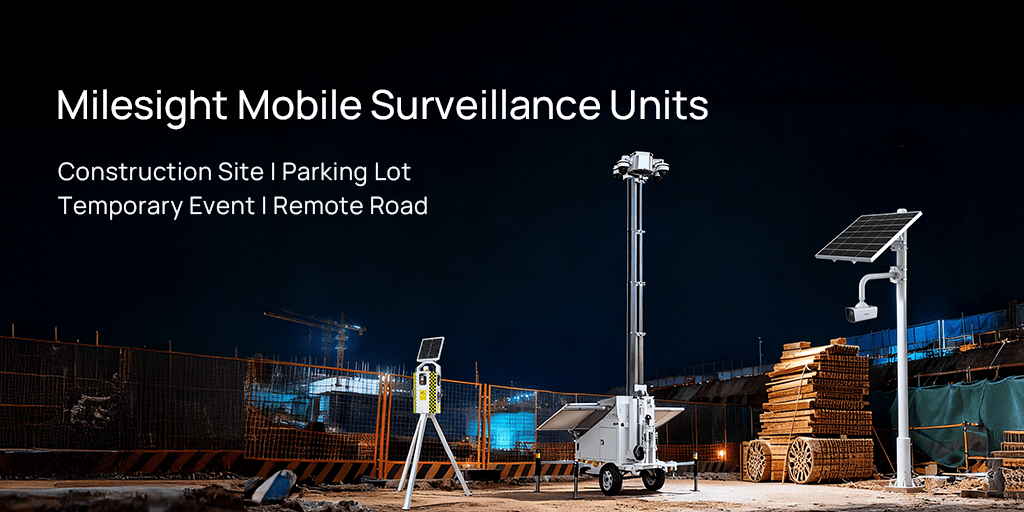
Many outdoor and remote sites face the same challenge: no power, no network, and the need for fast deployment and relocation. At the same time, these environments often carry higher risks such as theft, vandalism, and unauthorized access. Traditional surveillance systems are difficult to deploy under such conditions, while Milesight mobile surveillance units are designed specifically to address these challenges.
By combining trailer-, tower-, and box-based mobile units, Milesight provides a wireless security system and enables rapid deployment across a wide range of outdoor and temporary scenarios, including:
- Construction sites
- Temporary events
- Auto Dealership
- Retail warehouses
- Outdoor parking lots
These systems deliver not only video monitoring, but also intelligent detection, on-site decision, and active response, forming a complete and proactive security solution.
All-in-One Wireless Surveillance Systems for Full-Site Protection
When security needs grow beyond a single camera, mobile surveillance trailers, towers, and security boxes extend the everything-on-edge concept across an entire site. These self-contained surveillance units provide power, 4G/5G connectivity, edge recording, and computing for multiple cameras, typically combining three to four different camera types, such as full-color, panoramic, and PTZ, to deliver wide-area outdoor coverage. Instead of deploying separate components, organizations can bring a complete, ready-to-run security system wherever it is needed.
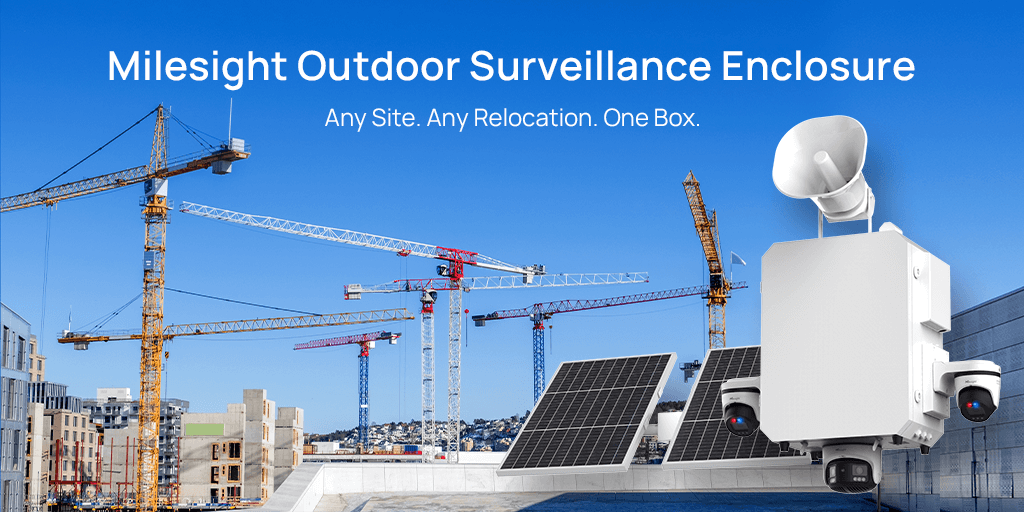
Edge AI Cameras Built for Outdoor Intelligence and Autonomy
Modern mobile surveillance units are built around a new generation of low-power, edge-AI cameras designed for harsh outdoor environments. These cameras deliver reliable video, intelligent detection, and real-time alarms, while seamlessly integrating with VMS platforms and back-end systems for centralized video and event management. By processing analytics, recording, and deterrence actions directly at the edge, such as activating lights, speakers, or alarms, mobile systems achieve faster response, lower data usage, and longer battery life, making them ideal for off-grid and mobile security deployments.
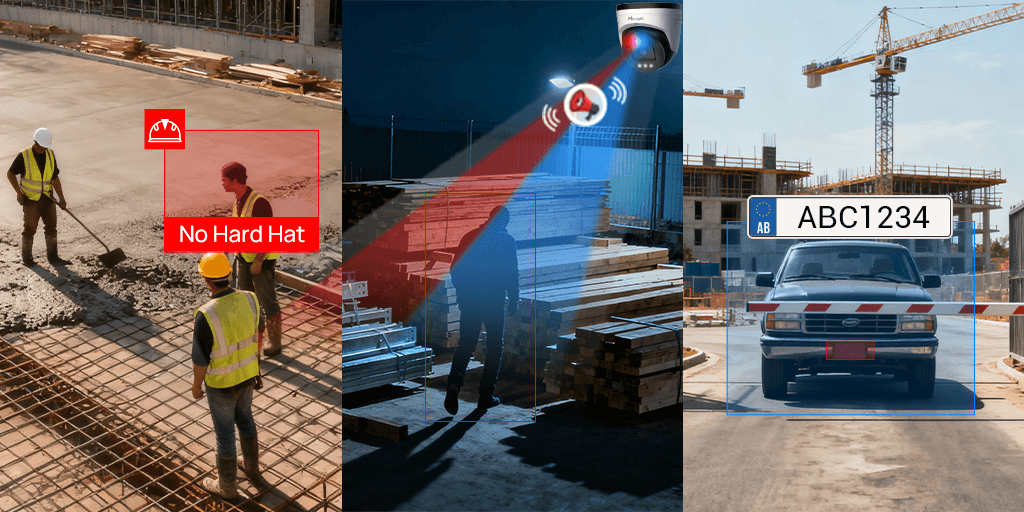
The Future of Wired and Wireless Camera: Everything-on-Edge Architecture
The future of wired and wireless cameras is not defined by connectivity alone, but by intelligence and adaptability. As surveillance systems evolve, cameras are becoming edge computing devices capable of analyzing data, making decisions, and responding to events locally.
Wired cameras will continue to play a critical role in stable, infrastructure-rich environments, while wireless cameras will drive innovation in outdoor, mobile, and temporary scenarios. Together, they form a hybrid security architecture that balances reliability with flexibility.
With edge AI, cloud management, and mobile deployment models working together, the next generation of surveillance systems is moving beyond passive monitoring toward proactive, scenario-driven security.
Frequently Asked Questions
Does Milesight offer 4G solar-powered cameras, and when should they be used?

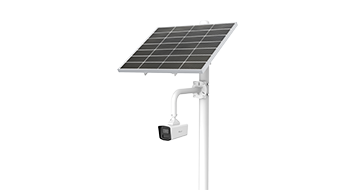
Yes, Milesight 4G Solar-powered cameras combine solar power, built-in batteries, 4G/5G connectivity, on-camera AI, and local storage in a single unit, enabling fast, cable-free installation. They are particularly suitable for scenarios such as remote sites, construction areas, perimeter checkpoints, parking lots, temporary facilities, and other outdoor environments where traditional wired systems are impractical.
Is there a hidden cost difference between wired and wireless security systems?
In infrastructure-ready buildings, wired systems usually have lower ongoing costs because they use the local network with no data fees. In outdoor, building power and network infrastructure for wired cameras can be far more expensive than using wireless cameras.
Wireless security systems do involve cellular data costs, but these are largely determined by how much and how often video is transmitted. Modern wireless cameras leverage edge AI, local recording, intelligent image compression, and event-based transmission to send only relevant video clips and alerts instead of continuous streaming. This allows organizations to optimize data usage and operating expenses while still maintaining reliable remote visibility and incident awareness.
Are wireless security cameras reliable? What about signal drops?
Modern 4G/5G cellular networks are designed for professional data transmission and provide wide-area coverage and stable connectivity for wireless cameras.
In addition, many wireless systems use edge recording and event-based transmission, meaning cameras continue to record locally even if the network connection is temporarily interrupted. Once connectivity is restored, footage and alerts can be synchronized, ensuring no critical events are lost.
When does wireless security outperform wired systems?
Wireless security cameras are the better choice when sites are outdoor, temporary, mobile, or off-grid—such as construction sites, parking lots, temporary events, remote facilities, or rural locations.
In these environments, power and network infrastructure is often unavailable or constantly changing, making wireless systems far more practical than running cables and building fixed networks.
Are wired and wireless security cameras competing or complementary?
Wired and wireless cameras are not rivals, they are often used together in hybrid systems.
For example, a building may use wired cameras indoors, while wireless cameras cover parking areas, entrances, and outdoor perimeters where cabling is difficult or costly. This hybrid approach allows organizations to combine the stability of wired surveillance with the flexibility of wireless security in a single, unified system.
What should I look for in a professional wireless security system?
Beyond basic connectivity, a professional wireless security system should offer three core capabilities:
· high-quality imaging (including full-color, wide-angle, and PTZ options)
· low-power edge AI for accurate detection and reduced false alarms
· open VMS compatibility to manage all cameras on a single platform
How can wireless security cameras be used for perimeter intrusion detection?
Wireless security cameras can provide highly effective perimeter intrusion detection by combining PIR (Passive Infrared) motion sensing, Always-on-Video (AOV), and on-camera AI verification.
Milesight PID cameras use PIR-based or video-based detection to identify real movement, while edge AI determines whether the target is a person or not, filtering out false alarms from animals, weather, or lighting changes. This approach delivers energy-efficient and highly accurate wireless perimeter protection, even in remote, off-grid, or temporary deployments.
Continue Reading

Mobile Surveillance Solution

Construction Site Solution

Temporary Event Security Solution

Retail Car Park Security Solution
Milesight Related Products
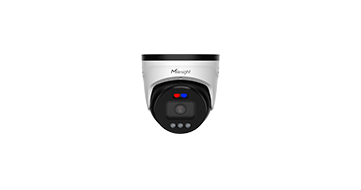
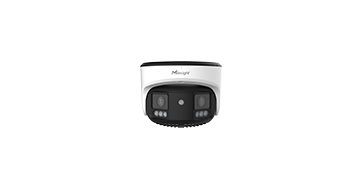
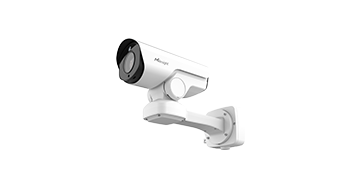
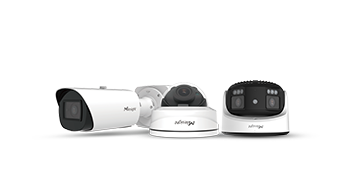
If you are interested in Milesight, please leave us a message.
Contact Us
Contact Us
Contact Us to Get More Information