Why Edge-AI PIR Cameras
Are the Future of Off-Grid
Perimeter Security Solutions
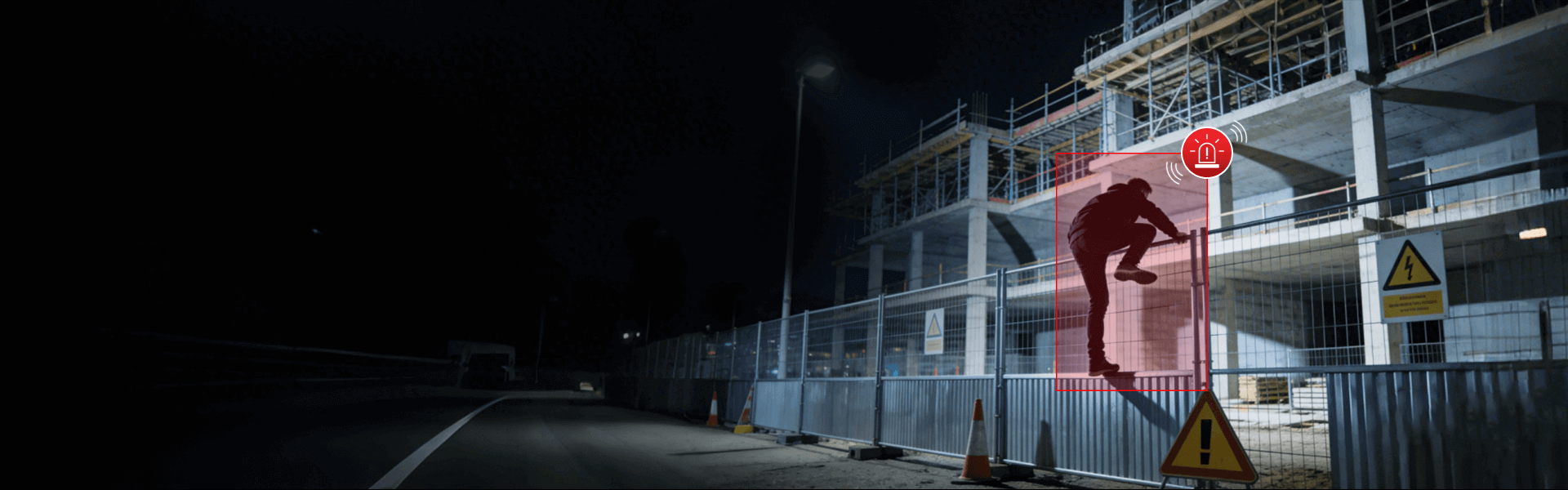
Off-grid and temporary sites face growing challenges in perimeter intrusion detection, including the lack of fixed power, wired networks, and permanent infrastructure. In these environments, PIR cameras, which integrate a Passive Infrared (PIR) sensor with a camera, provide an energy-efficient and reliable way to trigger surveillance based on heat-based motion detection, making wireless PIR cameras well suited for solar-powered and mobile perimeter security.
This blog outlines the role and limitations of traditional PIR-based perimeter protection, then explains how edge-AI PIR cameras enhance detection accuracy and explores real-world applications in off-grid and mobile deployments.
What Is Passive Infrared Motion(PIR) Sensor?
How PIR Motion Detection Works
A Passive Infrared (PIR) sensor is a low-power motion sensing technology that detects changes in infrared radiation caused by moving heat sources such as people or vehicles. Inside a typical PIR device, a Fresnel lens divides the field of view into multiple zones and concentrates the infrared energy from each zone onto the pyroelectric elements. When a person walks past, their body heat moves across these zones, causing the sensor signal to rise and fall over time, telling the PIR circuit that “something is moving” within its field of view.
Low-Power PIR Motion Detection Compared to Video Motion Detection
Because PIR motion detection passively detects existing infrared radiation rather than continuously processing video. PIR motion detection consumes far less power and allows the system to remain in an ultra-low-power standby state, “waking up” only when motion is detected. This event-driven design significantly reduces energy usage, making PIR sensors especially suitable for battery- or solar-powered, off-grid deployments where every watt matters.
PIR Limitations and the Role of Camera Integration
However, this heat-move-based approach also defines PIR’s limitations: because it does not capture images, a PIR sensor can only determine that “something moved”, without knowing what caused the trigger or whether it represents a real intrusion. In outdoor perimeter scenarios, this means PIR sensors may be activated by non-threat events such as large animals, hot air movement, or temperature fluctuations from sun-heated surfaces, resulting in false alarms and limited situational awareness.
These inherent constraints are why modern perimeter security increasingly combines PIR sensing with cameras, PIR provides low-power, motion-triggered activation, while the camera adds visual context.
Edge AI PIR Camera vs. Traditional PIR Sensor-based Camera: The Evolution of Perimeter Security
In many traditional designs, however, PIR detection happens at the front end and all PIR-triggered images or clips are sent to the cloud for AI filtering and classification. This means even false triggers (animals, hot air, harmless movement) are uploaded first, creating a long alarm chain and driving up 4G bandwidth usage, data costs, and response latency. Because verification and decision-making both depend on the cloud, any 4G delay or disconnection can postpone or even block on-site deterrence, leaving lights, sirens, or audio warnings inactive when they are needed most.
Edge AI PIR cameras take the next step by moving visual verification and decision-making onto the device itself. The camera uses on-edge AI to verify event immediately after a PIR/AOV triggered, and only uploads verified evidence to the backend. Even if 4G is slow or temporarily offline, the camera can still trigger local deterrence instantly and sync evidence later.
|
Dimension |
Traditional PIR Sensor-Based Camera |
Edge AI Visual Verification PIR Camera |
|
Detection |
PIR trigger only. (heat-based) |
PIR / AOV trigger + on-device AI. |
|
Event Filtering |
All PIR triggers sent to cloud, including false alarms. |
Events filtered at the edge before they become alarms. |
|
Alarm Chain |
Long chain: Trigger → capture → upload → cloud decide → transmit → alarm. |
Short chain: Trigger → edge AI decide → local alarm → upload. |
|
Evidence |
Mostly snapshot only |
Snapshot/clip for verified events. |
|
4G Dependency |
Verification and deterrence depend on stable 4G. |
Local deterrence still works when 4G is slow or down. |
|
Data Usage |
High 4G usage from many unverified events. |
Lower 4G usage by sending only valid events. |
|
False Alarm Impact |
False alarms consume bandwidth and operator time. |
False alarms largely removed at the camera. |
Limitation of Traditional PIR Sensor-Based Camera
1. Sensitivity to Environmental Conditions:
PIR detection accuracy is highly dependent on installation height, angle, and coverage design. Improper placement can amplify environmental influences and reduce detection reliability in outdoor perimeter scenarios.
2. High Volume of Local False Alarms:
PIR sensors may still be triggered by animals, hot air movement, or temperature changes, especially in outdoor environments. These unverified events are treated as alarms at the terminal, creating noise for operators and backend systems.
3. Limited Evidence Capture:
Many traditional PIR sensor-based cameras only capture basic snapshots or low-quality images when triggered. This lack of continuous video makes it difficult to build a complete evidence chain for incident review.
4. Long and Data-Heavy Alarm Chain:
PIR-triggered images or video clips must be transmitted to the cloud before confirming whether an intrusion is real, extending the alarm chain. This design consumes additional bandwidth and 4G data, especially when many events turn out to be non-threats.
Advantage of PIR Camera with AI Visual Verification
1. Edge-based visual verification:
After a PIR trigger, onboard AI analyzes the captured scene locally, validating real intrusions before alerts are generated.
2. Effective false alarm reduction:
Visual AI filtering eliminates non-threat events early, improving detection accuracy even in complex outdoor environments.
3. Short and efficient alarm chain:
Detection, assessment, and response occur on the device, minimizing latency and unnecessary data transmission.
4. Resilient off-grid operation:
Local deterrence continues even if 4G connectivity is slow or interrupted, with evidence stored locally and uploaded immediately once the connectivity restored.
By removing false alarms before transmission, the edge-AI PID workflow cuts unnecessary wake-ups and uploads, lowers 4G data usage, extends battery life for solar and battery-powered sites, while still delivering instant deterrence and a complete chain of evidence for every incident.
What Makes Milesight’s 4G Solar PIR Camera Ideal for Off-Grid Perimeter Security?
Tri-Sensing Perimeter Detection with PIR × AOV × AI
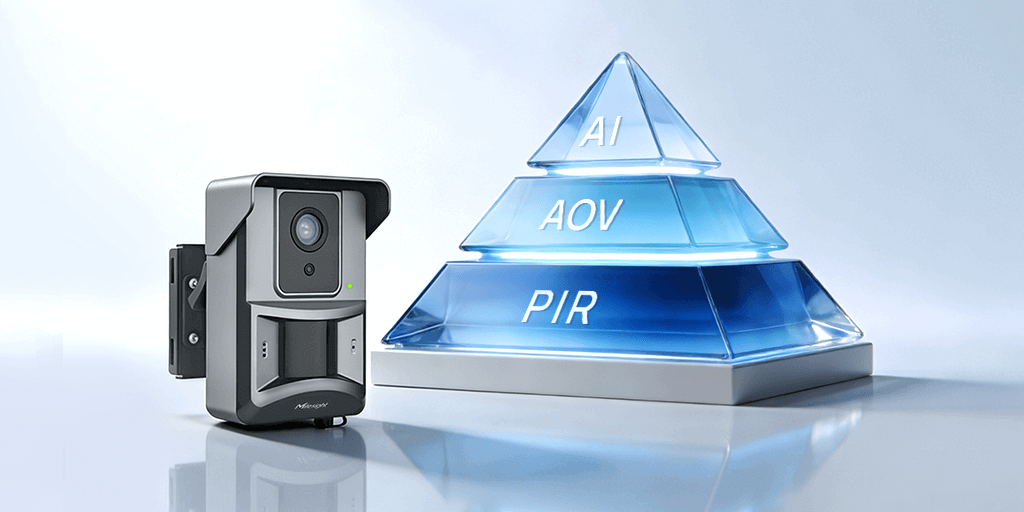
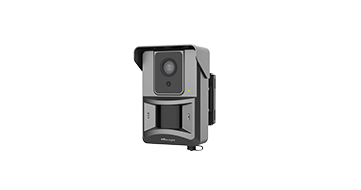
Milesight PIR security camera adopts a tri-sensing architecture that combines PIR motion sensing, AOV (Always-On-Video) visual awareness, and on-edge AI filtering. It delivers early, 30 m perimeter detection while keeping accuracy high across wireless, off-grid deployments.
On-Edge AI Visual Verification for Accurate Motion Detection
Both PIR and AOV events are verified by on-device AI, with user-defined detection zones filtering out irrelevant motion such as passing vehicles or pedestrians. By completing verification on the camera, the system reduces unnecessary wake-ups, latency, and 4G data consumption.
Low-Power Operation with Three Working Modes
Three working modes balance performance and power for off-grid security:
- ActiveGuard for full PIR + AOV detection.
- EcoSnap for periodic image capture with minimal consumption.
- Standby for ultra-low power with remote wake-up support.
Evidence-Ready Events with Snapshot and Video Proof
Powered by a 4 MP sensor and 1/1.8" large image sensor, Milesight Edge AI PIR camera captures clearer incident details and offers three evidence formats: multi-snapshot, short video clip, or snapshot + video, delivering a complete, investigation-ready trail.
Flexible Alert Actions for Faster Incident Response
When an event occurs, Milesight PIR camera for perimeter protection can push alarms, snapshots, or clips via HTTP(S)/MQTT(S), send email notifications, or trigger on-site deterrence through a speaker to play warning messages, supporting faster, more decisive response at remote sites.
Active Tamper Detection for Unattended Deployments
Built-in accelerometer and ToF sensors detect tilting, displacement, or lens blocking, helping keep protection online in unattended, high-risk locations and triggering alarms if tampering occurs.
Multi-Dimensional Device Insights for Remote Management
The PIR security camera offers intuitive remote management with insights such as 4G/Wi-Fi signal, GPS, battery status, temperature, altitude, and tilt angles, so operators maintain awareness without visiting the site.
What Are the Benefits of a PID Security System?
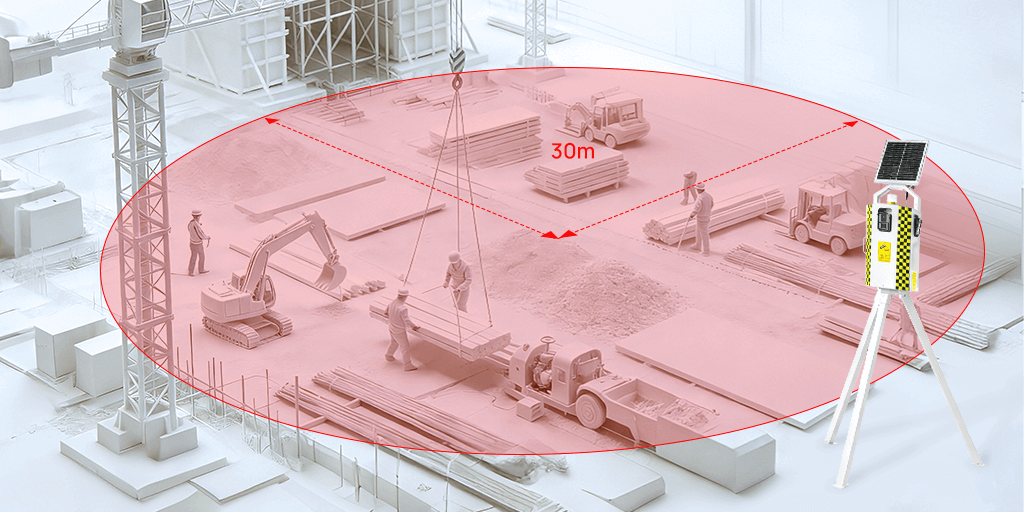
A PID security system mounts 4–6 PID cameras on a mobile CCTV tower to create a 360° virtual perimeter that works without existing infrastructure. Compared with fixed wired CCTV installations, a mobile PID system is not only easier to deploy and relocate, but also delivers a complete package, including power, connectivity, recording, and on-site AI-verified visual/audio deterrence, purpose-built for temporary, remote, and off-grid environments.
360° Perimeter Detection with Minimal Blind Spots
A tower-mounted PID security system with 4–6 PID cameras creates a 360-degree virtual perimeter with up to 30 m detection range. This configuration minimizes blind spots and delivers consistent coverage around temporary or open sites.
Easily Relocatable for Flexible Security Coverage
As the perimeter shifts or the project moves, the mobile PID tower can be relocated easily, so security investment follows the risk instead of being locked into a fixed, wired layout.
Proactive Deterrence Through Integrated Alerts
Edge-AI PID cameras verify people and vehicle intrusions before triggering lights, sirens, or audio warnings on the tower, turning the system into an active deterrent rather than a passive recorder.
Rapid Installation with Minimal Setup
A PID security tower can be dropped onto a site and brought online without trenching, cabling, or paper works, enabling fast perimeter protection for projects that cannot wait for permanent CCTV infrastructure.
Fully Autonomous Operation for Remote Sites
A 4G solar PID system integrates power, connectivity, and on-edge AI so it can operate continuously without on-site utilities or staff. This fully self-contained design is ideal for remote, unmanned locations where traditional CCTV is difficult or too costly to maintain.
Typical Use Cases of PIR Camera in Outdoor Perimeter Security
From construction sites and railways to vacant properties, remote farms, utilities, and off-grid fields, wireless PIR camera solutions provide motion-triggered detection, off-grid operation, and rapid deployment where traditional fixed CCTV is difficult or costly to install.
Construction Site
- Site Security Pain Points:
Construction perimeters change frequently, there is often no fixed power or network, and theft of tools, materials, and heavy equipment happens after hours or in unmanned zones.
- Why a PID Tower Fits Dynamic Job Sites:
A tower-mounted PID system combines multiple PIR cameras, 4G connectivity, power, storage, and deterrence into a compact, self-contained perimeter solution. As the site evolves, the mobile tower can simply be relocated, maintaining protection without re-cabling or rebuilding the system each time the boundary changes.
Railway & Airport
- Risks Along Long Perimeters:
Railway lines and airport outer perimeters are long, open, and sparsely staffed, with intrusion risks from trespassing and vandalism in remote stretches where trenching or wired CCTV is impractical.
- How Wireless PIR Cameras Secure Long Perimeters:
Wireless PIR security cameras with edge-AI verification can be mounted directly along the fence line, typically spaced around every 60 meters to form a continuous virtual perimeter around the site. Powered by solar/battery and 4G, this PID security setup delivers early intrusion awareness along extended railway and airport boundaries.
Solar Farms & Remote Fields
- Security Challenges in Off-grid Areas:
Solar farms and remote agricultural fields are usually far from grid power and staff, yet require reliable, continuous perimeter awareness to prevent theft, vandalism, and crop damage.
- How Solar-Powered PIR Cameras Enable Long-Endurance Protection:
A solar-powered PIR camera operates in ultra-low-power standby and wakes only when motion is detected, dramatically extending battery life for long-endurance, unattended deployments. On-edge AI further filters animals and environmental motion, reducing nuisance alarms and unnecessary power use.
Conclusion — The Future Trend of PIR Technology in Outdoor Security
As outdoor security moves toward more remote, off-grid and fast-changing environments, PIR technology is clearly evolving from simple motion sensing to smart, edge-AI–driven perimeter protection. Low-power PIR and AOV provide the event-driven foundation, while edge-AI PID cameras add on-device visual verification, evidence capture, and instant deterrence, reducing false alarms, cutting 4G costs, and enabling truly autonomous operation.
From compact PID towers on construction sites to fence-line PIR cameras around railways and long-endurance solar-powered units in remote fields, the future of PIR in outdoor security is not just “detecting movement,” but delivering accurate, efficient, and mobile perimeter protection wherever fixed CCTV cannot reach.
Frequently Asked Questions
What’s the typical detection range of a PIR camera?

A typical PIR camera using a Passive Infrared sensor detects motion within about 10–30 meters, depending on installation, lens type, and environment. Milesight’s PIR camera supports up to 30 m detection distance.
What is the ideal height and angle for installing a PIR camera outdoors?
For most PIR cameras, the ideal mounting height is around 2 meters, angled slightly downward toward the monitored area. Avoid pointing the PIR motion sensor toward busy roads, reflective surfaces, or direct heat sources to keep PIR motion detection stable and accurate.
What Technologies Are Commonly Used in Perimeter Intrusion Detection?
Modern AI-enabled perimeter security often combines multiple sensing layers, such as:
· PIR — low-power, heat-based motion detection, ideal for off-grid and wireless PIR camera deployments.
· Thermal imaging — detects heat contrast at long distances, useful for wide open areas and night surveillance.
· Radar — tracks movement and speed across large zones, less affected by weather, best as an early-warning layer.
· AI VCA — visually identifies people and vehicles, reducing false alarms through intelligent classification.
Many advanced systems integrate these technologies into a PID camera system or wireless intrusion detection camera to improve accuracy and reduce false alarms.
Are Milesight PIR cameras NDAA compliant?
Yes. Milesight PIR cameras and Edge AI PIR cameras are built using NDAA-compliant components, suitable for regulated projects and government-restricted deployments.
Can PIR cameras integrate with existing VMS systems?
Yes. Milesight PIR security cameras support open standards such as HTTP(S) and MQTT(S). Verified events from the PIR CCTV camera can be pushed seamlessly into your systems.
Do PIR cameras work at night or in fog?
A wireless PIR camera detects heat, not visible light, so it works effectively at night. However, extreme temperature changes, heavy fog, or steam can influence the PIR sensor, which is why combining PIR with AOV + AI in an Edge AI PIR camera improves reliability across changing weather.
What is the false alarm rate of Milesight AI-enhanced PIR camera?
Milesight AI-enhanced PIR motion detection security cameras use on-edge AI to distinguish people and vehicles from animals, vegetation, or heat fluctuations. When installed correctly, wireless PIR motion detectors significantly reduce false alarms compared with PIR-only systems, while still maintaining fast perimeter intrusion detection.
Continue Reading

Mobile Surveillance Solution

Construction Site Solution

Temporary Event Security Solution
Retail Car Park Security Solution

Trailer Solution
Milesight Related Products
If you are interested in Milesight, please leave us a message.
Contact Us
Contact Us
Contact Us to Get More Information