How EG71 Building IoT Gateway Helps Reduce Building
Integration Costs by $10,000+

Table of Content
Building integration costs can spiral quickly when every new protocol, signal type, and platform requirement adds another device to the project. A retrofit project that starts with a few meters, sensors, and HVAC systems may soon require multiple gateways, I/O modules, protocol converters, edge controllers, software licenses, cabinet wiring, onsite configuration, and repeated commissioning work.
That is where EG71 creates value. Milesight EG71 Building IoT Gateway helps simplify this architecture by combining wired building integration, LoRaWAN® connectivity, rich interfaces, local I/O, edge computing, and BMS connectivity in one gateway. For System Integrators, Solution Providers, BMS companies, and distributors, this means fewer unnecessary layers across the full project lifecycle.
In the right project scenario, the savings can easily exceed $10,000.
The Hidden Cost of Traditional Building Integration
In many building retrofit projects, every new requirement adds another device. A wired protocol gateway may be needed for Modbus or BACnet equipment. A LoRaWAN® gateway may be added for wireless LoRaWAN® sensors. I/O modules may be required for dry contacts, switches, alarms, analog signals, or meter pulses. An additional controller may be installed for local logic. If the selected gateway is bundled with a software platform, the customer may also pay for an application layer they do not actually need. This stacked architecture increases more than hardware cost. It also brings extra cabinet space, more wiring, longer onsite configuration, additional commissioning work, more documentation, and more components to maintain over time.
For customers that already have a BMS, EMS, HMI, cloud dashboard, or custom application, the problem is often not the lack of another software platform. The real problem is how to connect diverse field devices into the existing system in a simpler and more cost-efficient way.
EG71 addresses this problem by working as an edge integration layer between field devices, building systems, and upper-level platforms.
One Gateway, Multiple Integration Roles
EG71 is not just a gateway. It is designed to take on multiple roles in building integration projects. It can work as a wired building gateway, LoRaWAN® gateway, protocol conversion gateway, local I/O device, edge controller, and BMS integration layer. This makes it especially valuable for mixed wired-and-wireless projects, where traditional architectures often require several different devices to achieve the same result. Instead of stacking separate hardware for each function, project teams can use EG71 to consolidate key integration tasks into one gateway.
For System Integrators and Solution Providers, this means fewer devices to install, configure, test, and maintain. For BMS companies, it means a flexible hardware layer that can connect field devices into existing platforms. For distributors, it creates a more competitive product offering with stronger project value and margin potential.
Where the $10,000+ Savings Come From
The value of EG71 does not come from one single saving point. It comes from reducing cost across hardware, software, labor, configuration, and long-term maintenance.
|
Cost Area |
Traditional Architecture |
With EG71 |
Estimated Saving / Example Calculation |
|
Installation & engineering labor |
More devices to install, wire, configure, test, and document |
Pluggable terminals, NFC-based setup, and fewer integration steps |
$6,000 = 100 units × 1 hour saved × $60/hour |
|
I/O modules or converters |
Extra I/O modules for dry contacts, analog signals, meter pulses, or field signals |
Built-in local I/O and rich interfaces |
$2,000–$4,000 = 20–30 modules avoided × $100+ per module |
|
Software or license dependency |
Bundled platform, data point packages, or software licenses |
Connects to existing BMS, HMI, cloud, or custom platform |
$2,000+ in avoided software-related cost |
|
Extra gateways |
Multiple gateways for different systems or data point limits |
Consolidated Building IoT Gateway with up to 20,000 data points |
$500~$1,000+ per avoided gateway, project-dependent |
|
Local control hardware |
Additional controller or server for local logic |
Node-RED, Python, and Docker at the edge |
Hundreds to thousands of dollars, depending on controller/server requirements |
|
Commissioning and maintenance |
More components to test, document, troubleshoot, and maintain |
Fewer devices and a cleaner architecture |
Project-dependent long-term savings |
Actual savings depend on project size, device mix, labor cost, existing architecture, and competitive comparison. But in mixed-protocol building projects, the saving potential becomes especially clear.
For example, if a System Integrator deploys 100 units per year and saves just one hour of engineering work per unit, the annual labor saving alone can reach around $6,000 based on a $60/hour labor estimate. When this is combined with fewer gateways, fewer I/O modules, reduced software-bundled gateway cost, and less maintenance complexity, the total saving can quickly exceed $10,000.
In larger multi-building or government-type projects, the saving can be even higher. In a 30-gateway project scenario, the cost advantage may reach around $30,000 depending on project design and comparison model.
Fewer Devices, Cleaner Architecture
One of the most direct ways EG71 reduces project cost is by reducing hardware stacking.
In a traditional building integration project, teams may need to combine a protocol gateway, LoRaWAN® gateway, I/O module, and local controller. Each additional device adds cost, wiring, space, configuration, and failure points.
EG71 helps simplify this structure by bringing multiple integration capabilities into one gateway. It supports mixed building protocols and interfaces, connects LoRaWAN® devices, handles local I/O, and enables edge-side processing.
This is especially useful in commercial buildings, campuses, hotels, apartments, energy retrofits, and smart facility upgrades where multiple systems need to be connected into one BMS or upper-level platform.
EG71 also supports up to 20,000 data points and up to 2,000 connected devices, making it suitable for device-dense projects. When traditional gateways reach their data point limits, project teams may need to add extra gateways even when the physical deployment area does not require them. With higher data point capacity, EG71 can help consolidate workloads into fewer gateways depending on project design.
Lower Software Cost Without Platform Lock-In
Many building gateway solutions are tied to software bundles, data point packages, or subscription-based service models. This can be useful when customers need a ready-made application platform, but it is not always necessary. Many BMS companies, System Integrators, and Solution Providers already have their own software environment. They may use an existing BMS, EMS, HMI, cloud dashboard, SCADA system, or custom application. In these cases, paying for another bundled software layer can increase cost without adding enough value.
EG71 takes a more flexible, hardware-first approach. It focuses on device connection, protocol conversion, local control, data processing, and platform integration. This allows customers to connect field devices into their existing systems instead of being locked into another software ecosystem. For customers replacing software-bundled gateway models, EG71 can help reduce usage cost by up to 60% in suitable scenarios. The value is especially clear when the customer needs a reliable edge integration gateway, not another application platform.
Faster Deployment, Lower Labor Cost
Labor cost is often underestimated in building integration projects. A gateway is not only purchased. It must be installed, wired, configured, tested, documented, commissioned, and maintained. When multiple devices are involved, every step becomes more complex.
EG71 is designed to simplify onsite deployment. Its pluggable terminal design helps make wiring faster and easier compared with traditional screw-based installation methods. In applicable deployment steps, this can help reduce wiring and installation time by up to 70%.
EG71 also helps reduce repetitive configuration work through NFC-based setup for Milesight devices. Instead of spending excessive time on repeated onsite configuration, integrators can streamline device setup and commissioning workflows. In applicable deployments, NFC-based setup can reduce repetitive configuration time by up to 90%.
For System Integrators and Solution Providers, this means faster project delivery and lower engineering workload. For distributors and end users, it means easier onboarding, fewer deployment barriers, and a smoother project experience.
Edge Control Without Adding Another Controller
EG71 is more than a data forwarding gateway. It supports local control and secondary development with tools such as Node-RED, Python, and Docker. This allows integrators to build local logic directly at the edge. This matters because many building projects require more than data collection. They may need local alarm logic, sensor-based HVAC linkage, equipment control, scheduled automation, data processing, or offline operation.
With EG71, some of this logic can run directly at the gateway level. This can reduce the need for additional controllers, servers, or cloud-side development. It can also improve system resilience. When cloud communication is unstable, certain local logic can continue running at the edge.
For projects that require local deployment, data privacy, or reliable offline operation, this edge capability helps reduce both technical risk and long-term operating cost.
Why It Matters for SIs, SPs, BMS Companies, and Distributors
For System Integrators, EG71 helps reduce project complexity. Fewer devices, less wiring, faster configuration, and stronger edge capability mean faster delivery and fewer variables to manage onsite.
For Solution Providers, EG71 creates a more flexible building IoT architecture. It can connect diverse devices and systems while allowing the solution provider to keep using its own software platform or application layer.
For BMS companies, EG71 provides a powerful hardware integration layer. It helps bring field-level data from wired devices, LoRaWAN® sensors, and local signals into an existing BMS environment.
For distributors, EG71 offers a stronger value proposition. Instead of competing only on gateway price, distributors can position EG71 as a cost-saving integration solution that reduces hardware stacking, software dependency, and deployment workload.
Is EG71 a Good Fit for Your Project?
EG71 is especially suitable for building integration projects that involve mixed wired and wireless systems, existing upper-level platforms, and cost-sensitive retrofit requirements.
It is a strong fit for projects involving:
- Mixed BACnet, Modbus, LoRaWAN®, I/O, and legacy device integration
- Retrofit buildings where rewiring is costly or disruptive
- Existing BMS, EMS, HMI, SCADA, or cloud platforms
- Multi-building or device-dense deployments
- Local control, edge logic, or offline resilience requirements
EG71 is not just a wireless gateway, not just a simple data logger, and not a full BMS front end by itself. It is a Building IoT Gateway and edge integration layer designed to simplify complex building integration projects, reduce unnecessary hardware and software layers, and help lower total project cost.
Talk to Milesight to evaluate how EG71 can simplify your next building integration project. Get in Touch>>>
Continue Reading
Milesight Related Products
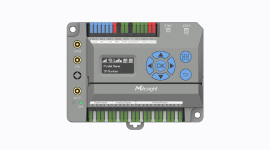
EG71 Building IoT Gateway
EG71 is an intelligent edge IoT gateway that unifies wired and wireless connectivity in a single device, simplifying data aggregation, protocol conversion, and local control for smart building integration across both new construction and retrofit projects.
Explore More