BMS Integration for Smart Building
Seamless BMS Integration with Milesight IoT Sensors and Gateways
- Introduction
- Framework
- BMS Platforms
- Benefit
- Scenario
- Product
- Application
- Case
- Related Resources
- FAQ
- Home
- Solution
- BMS Integration
Wired and Wireless BMS Integration
BMS integration refers to the process of connecting sensor data and devices to a Building Management System (BMS) for centralized monitoring and control. With Milesight solution of both
wired connections and wireless transmission through IoT gateways, data from field devices can be collected, converted, and sent to the BMS in a simple and reliable way.
This architecture makes deployment more flexible, improves system visibility, and helps buildings scale more easily. More importantly, stronger compatibility makes it easier to connect
different devices and systems together, creating a more unified and future-ready building infrastructure.
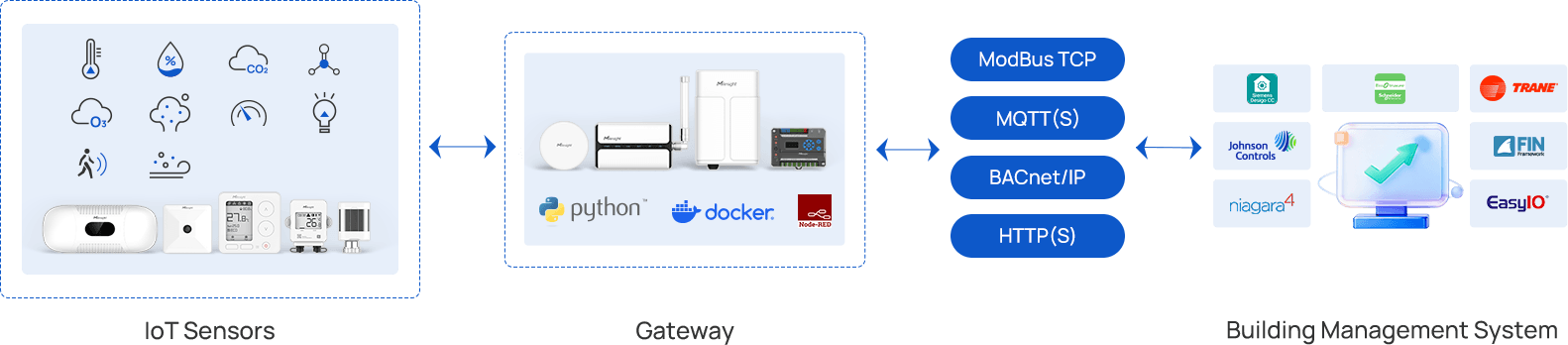
BMS Integration Solution Framework
Turn sensor data into BMS-ready insights with a flexible architecture built for easier integration. With Milesight gateway-based protocol conversion and support
for Modbus TCP, MQTT(S), BACnet/IP, and HTTP(S), it helps bring more devices into the system and unlock smarter, more connected building management.
Validated Across Leading
BMS Platforms
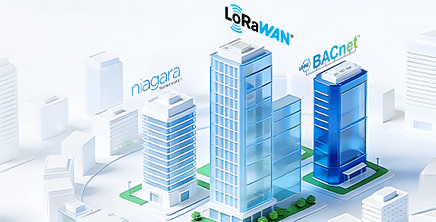
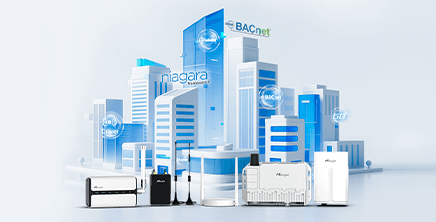
Designed for easier integration with mainstream building management platforms, the Milesight BMS Integrated Solution supports both validated frameworks and widely adopted BMS systems. This helps reduce integration barriers, speed up deployment, and simplify project delivery across different building environments.


Milesight BMS Integration Benefits
Easy Configuration
Simplify device onboarding and system setup within the BMS for faster deployment.
- Normalize devices across different protocols into a unified interface for the BMS.
- Seamless BACnet-based device discovery of both scanning and being discovered.
- Template-based onboarding, third-party ready, continuously expanding.
- Support NFC-based automatic device addition.
Scalable Architecture
Easily expand the system as project needs grow, integrating new devices with minimal effort.
- Forward data to multiple objects, supporting up to 20,000 objects.
- Provide an open development environment with Docker, Python, and Node-RED.
Reliable Security
Protect data transmission and system access with secure communication and dependable network architecture.
- Feature robust encryption, advanced authentication, trusted algorithms, and private network support.
- Secure connectivity with VPN and RED-certified communication.
- Proactive vulnerability management with continuous monitoring and reporting.
Flexible Deployment
Support both wired and wireless integration across different building layouts, making deployment easier in complex environments.
Actionable Data
Bring more building data into the BMS to improve visibility and support better operational decisions.

Broad Connectivity for More Building Scenarios
Milesight BMS Integration Solution supports a wide range of wired and wireless protocols and interfaces, enabling seamless connectivity with sensors, meters, and controllers. From retrofit projects to modern smart buildings, it simplifies integration across diverse field devices and system environments.

Typical Building Scenarios
Fit different building needs, from retrofit projects to smart building deployment.
Retrofit Integration
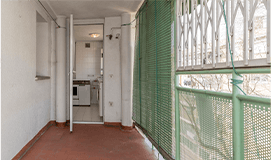
Connect legacy HVAC devices, controllers, and meters.

IP-Based Building System
Support faster communication and easier integration with modern BMS platforms.

Room and Space Automation
Be ideal for lighting, room control, and other space-level automation applications.

Wireless Coverage Extension
Be well suited for large, distributed, or hard-to-wire areas that need more
flexible deployment.
Complete Protocols for All Building Applications
LoRaWAN®

Modbus RTU
BACnet MS/TP
Modbus TCP
BACnet/IP
KNX TP
M-BUS
I/O
Complete Gateway Portfolio for BMS Integration
| Model | 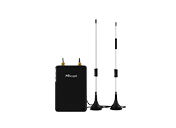 UG56 Industrial | 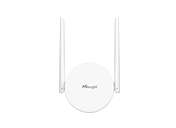 UG63 Mini | 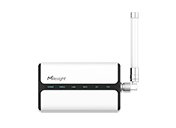 UG65 Indoor | 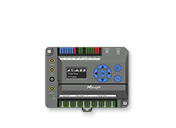 EG71 Indoor Building | 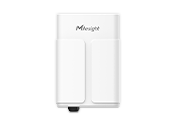 UG67 Outdoor |
| Application Scenarios | 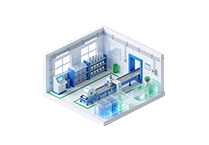 Indoor Industrial | 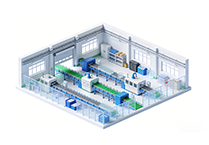 Indoor Environment/ | 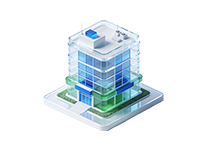 Indoor Environment/ |  Indoor Environment/ |  Outdoor Environment |
| End-Node Connection |  |  | | | |
| Communication Range |  |  | | |  |
| Interface | LoRa®, WiFi, Ethernet, Cellular (Optional) | LoRa®, WiFi, Ethernet, Cellular (Optional) | LoRa®, WiFi, Ethernet, Cellular (Optional) | LoRa®, RS485, Ethernet, Cellular, Wi-Fi, KNX, M-Bus, DI/DO. AI/AO | LoRa®, WiFi, Ethernet, Cellular (Optional) |
| Learn More | Learn More | Learn More | Learn More | Learn More |
Unlock Smarter Building Operations
with Integrated IoT Applications
By integrating IoT data into existing BMS platforms, buildings gain real-time visibility and centralized control across facility management, energy systems, and space utilization. This enables more efficient operations, improved occupant comfort, reduced energy consumption, and smarter, data-driven decision-making.

Facility Management Solution
Facility Management Solution
- HVAC System Performance Monitoring
- Circuit Operational Status Monitoring
- Facility Protection
- Unified Lighting Control
- Centralized HVAC Control
- Remote Meter Reading
- Water Supply Control
- Restroom Cleaning Schedule Management
- Restroom Supplies Management
- Facility Utilization Management

Energy Management Solution
Energy Management Solution
- HVAC Automation Adjustment
- Real-Time Local HVAC Interaction
- Data-Driven HVAC Operation Strategy Optimization
- Smart Lighting Control
- Real-Time Local Energy Interaction
- Data Driven Energy Strategy Optimization

Space Management Solution
Space Management Solution
- Restroom Air Quality Management
- Noise Monitoring
- Temperature and Humidity Control
- E-cigarette/Cigarette Detection
- Space Optimization
- Sanitation Management
- User Satisfaction Management
- Employee Scheduling
- IAQ Monitoring
- Safety & Healthy Monitoring
Success Stories in People Sensing Driven Building
Heat and Energy Consumption Monitoring over 100 Residential Buildings
A portfolio of over 100 residential buildings required a non-intrusive way to monitor electricity and heat consumption across mechanical and boiler rooms, where traditional systems often operate without continuous supervision. To avoid complex cabling in occupied condominiums, a wireless IoT solution was deployed using UC100 controllers and UG56 LoRaWAN® gateways. Field data from multimeters and BTU meters is collected via Modbus, transmitted over LoRaWAN®, and seamlessly integrated into the existing Niagara-based BMS via BACnet/IP—enabling centralized visibility and efficient energy management without altering the existing network infrastructure.
- Location: Italy
- Devices Deployed: UC100, UG56
- BMS Applied: Niagara 4
Real-time Monitoring and Control of HVAC Systems to Maximize Energy
Efficiency and Sustainability
A university in Abu Dhabi upgraded its campus with an IoT-based smart building solution to improve comfort and operational efficiency. By deploying VS121 occupancy sensors and AM103 IAQ sensors, the system enables real-time monitoring of space usage and environmental conditions. Integrated with building systems, it allows dynamic control of HVAC and lighting—ensuring optimal comfort in occupied areas while reducing energy waste in unused spaces, ultimately supporting a more efficient and intelligent campus.
- Location: UAE
- Devices Deployed: VS121, AM103, UG65, UG67
- BMS Applied: Adeeb Group



FAQs on BMS Integration
Q: What integration methods are available for connecting IoT solutions to BMS?
Milesight supports flexible BMS integration through two primary approaches. For direct integration, the IoT gateway communicates with the BMS via standard protocols such as BACnet/IP or Modbus TCP, enabling fast and straightforward deployment. Alternatively, platform-based integration allows data to be transmitted from sensors to an IoT platform and then integrated into the BMS via MQTT or API, supporting more advanced data processing and scalability. Edge data processing can also be supported in specific scenarios if required.
Q: What types of sensors are supported for BMS integration?
With support for multiple communication protocols and physical interfaces, the solution ensures seamless connectivity with a broad range of building devices, enabling flexible integration across diverse building systems. Milesight building management system integration supports a wide range of building sensors tailored to common smart building applications. These include occupancy sensors for space utilization and automation, IAQ sensors for monitoring CO₂, temperature, and humidity, as well as energy meters for electricity, heating, and water consumption tracking. By covering key scenarios such as HVAC optimization, energy management, and space efficiency, these sensors enable more intelligent and responsive building operations without adding complexity.
Q: How complex is the integration process?
Milesight BMS integration is designed to be simple and non-intrusive. By leveraging standard protocols and pre-configured data models, the solution can be integrated into existing BMS platforms without requiring major system changes, significantly reducing deployment time and engineering effort.
Q: Is the solution suitable for retrofit projects?
Yes. The solution is ideal for retrofit scenarios where cabling and structural modifications are limited. With wireless deployment and flexible integration, it enables seamless data collection and system upgrade in existing buildings without disrupting daily operations.
Q: How to integrate IoT sensors with a BMS?
Integrating IoT sensors with a BMS typically involves a few simple steps:
- 1. Connect sensors to a gateway via protocols like LoRaWAN® or Mod bus;
- 2. Normalize device data into a unified format;
- 3. Configure data mapping to BMS points (e.g., via BACnet) ;
- 4. Set up data forwarding and communication parameters;
- 5. Verify device discovery and data visualization in the BMS.