Background
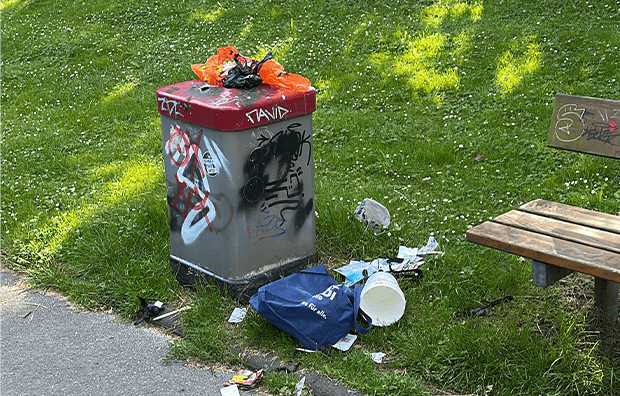
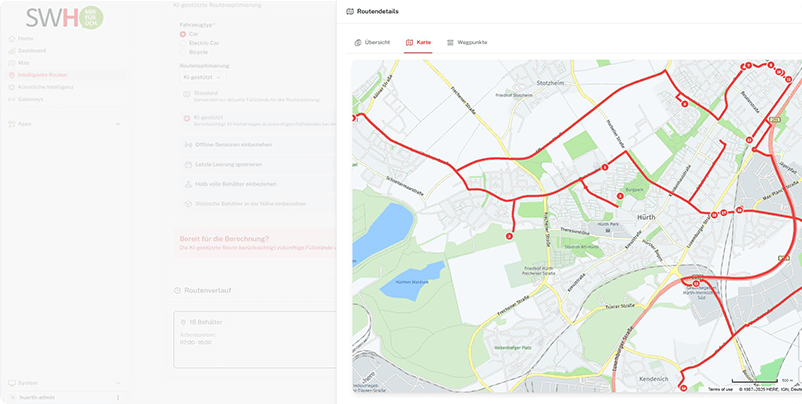
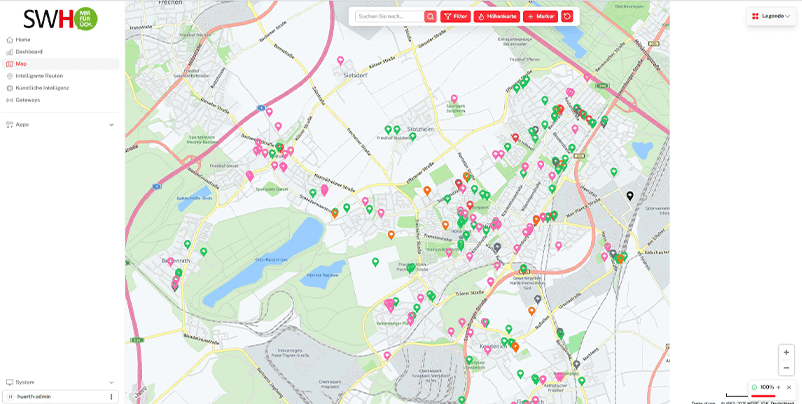
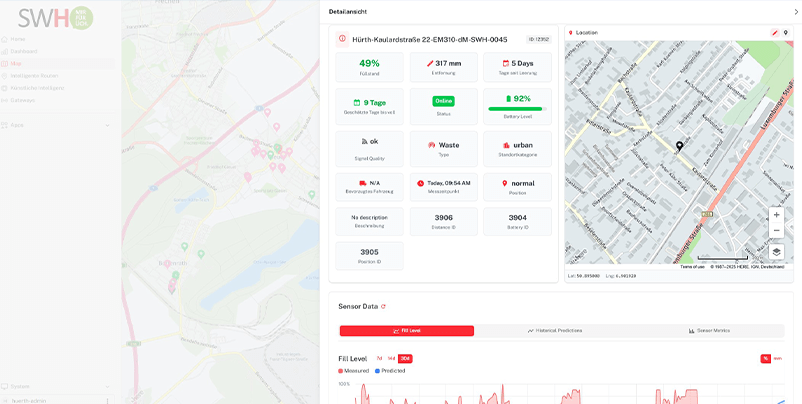
The City of Hürth relied on fixed collection routes for public waste bins, but actual fill levels varied widely across locations. As a result, half-empty bins were emptied unnecessarily while critical points overflowed, leading to wasted mileage, higher operating costs, and increased complaints due to “wild garbage.” The municipality recognized that manual, experience-based scheduling was no longer efficient or reliable. A data-driven solution with real visibility and predictive logic was required — one that could support precise route planning, reduce wasteful trips, and remain cost-effective, robust, and fast to deploy. This requirement triggered the project.